Table of Contents
ToggleBuilding a dedicated home theater isn’t just about the screen and sound system. The seating can make or break the viewing experience, and Fortress has become a go-to name for homeowners who want that authentic cinema feel without the sticky floors and strangers. Known for high-end construction, comfort-focused engineering, and customization options that rival commercial installations, Fortress seating sits at the intersection of furniture craftsmanship and theater-grade design. This guide walks through what sets Fortress apart, how to choose the right model for a space, and what it takes to install and maintain these recliners for years of movie marathons.
Key Takeaways
- Fortress home theater seating stands out through kiln-dried hardwood construction, whisper-quiet motorized recline mechanisms rated for tens of thousands of cycles, and ambient LED base lighting that enhances both safety and viewing experience.
- Fortress seating includes premium features like power headrests, USB charging ports, integrated cooling cupholders, and motorized memory presets that let each viewer customize their ideal seating position.
- Proper planning requires measuring at least 60-68 inches of clearance behind seats for full recline, accounting for 36-inch minimum aisles, and ensuring each motorized seat has dedicated electrical access on a 15-amp circuit.
- Installation demands two people and 2-3 hours per row, with seats bolted to the subfloor using deck screws into joists or concrete anchors to prevent rocking and ensure stability during recline cycles.
- Leather upholstery needs pH-neutral conditioning every 6-12 months, motorized mechanisms should be inspected for debris regularly, and respecting the 250-300 pound capacity rating per seat preserves both durability and warranty coverage.
- Fortress offers multiple collections—from the classic Matinee line with button tufting to the modern Showtime design—plus curved or straight row configurations that maximize seating flexibility for different room shapes and aesthetic preferences.
What Makes Fortress Home Theater Seating Stand Out?
Fortress positions itself in the premium tier of home theater seating, competing with brands like Seatcraft and Octane, but it distinguishes itself through build quality and material selection. Most Fortress models use top-grain leather or high-performance fabrics treated for stain resistance, and the frames are built from kiln-dried hardwood rather than particleboard or softwood composites. That’s the same construction method used in upscale furniture that’s expected to last decades, not just a few years of heavy use.
The recline mechanisms are another differentiator. Fortress uses whisper-quiet motorized actuators on most power recline models, rated for tens of thousands of cycles. Cheaper theater seats often rely on mechanisms that wear out or become noisy within a year or two. The motors are also independently controlled per seat, so one person can recline fully while another stays upright, important in rows of three or four seats.
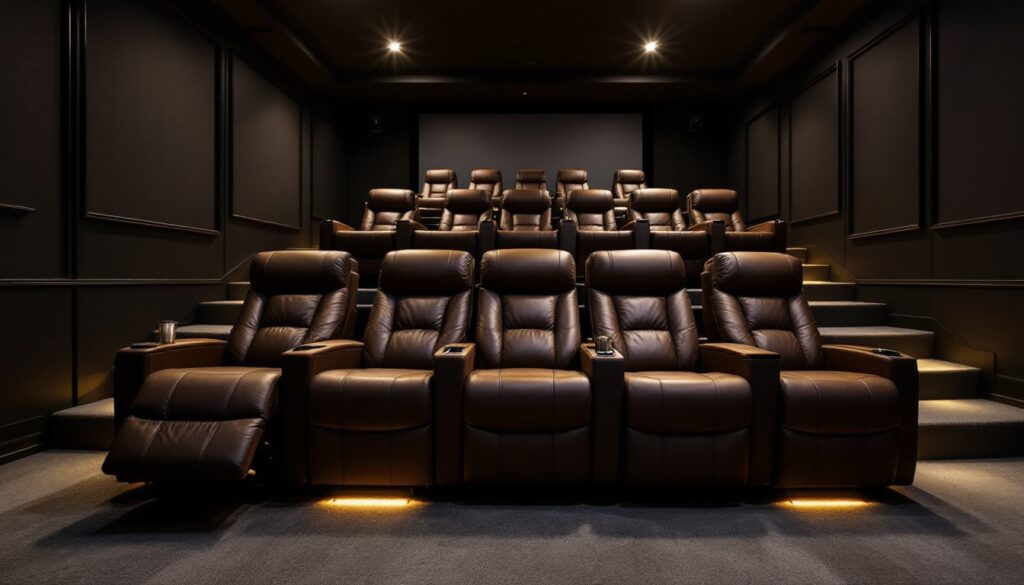
Another standout: ambient base lighting. Many Fortress models include LED strips along the seat base that provide soft illumination during movies, reducing trip hazards without spilling light onto the screen. It’s a feature borrowed from commercial cinemas and adds both safety and ambiance.
Key Features and Design Elements
Fortress seating comes loaded with features that go beyond basic recline. Power headrests let viewers fine-tune neck support without adjusting the entire seat angle, useful for long viewing sessions. USB charging ports and wireless charging pads are integrated into armrests on most mid-to-high-tier models, keeping devices topped off without running extension cords.
Tray tables that fold out from armrests are standard on many collections, and they’re built with real wood veneers or high-pressure laminate, not flimsy plastic. Some models include cooling cupholders that keep drinks cold via thermoelectric modules, a luxury touch that also prevents condensation rings.
The lumbar and headrest adjustability on Fortress seats often rivals office ergonomic chairs. On higher-end models, users get memory presets for recline positions, so each family member can store their preferred configuration. And for audiophiles, Fortress offers integrated tactile transducers (bass shakers) that sync with subwoofer output, adding physical rumble to explosions and low-frequency effects without disturbing neighbors.
Popular Fortress Seating Collections and Styles
Fortress breaks its lineup into several collections, each targeting different aesthetic and functional priorities. The Seating Matinee collection focuses on classic theater styling with deep button tufting, rolled arms, and rich leather finishes. These are hefty pieces, individual seats often weigh over 150 pounds, and they’re designed to look like traditional cinema seating from the golden age of movie palaces.
The Seating Showtime line leans modern, with clean lines, minimal stitching, and sleek armrests. It’s a better fit for contemporary spaces where ornate detailing would clash. Materials include both leather and high-performance synthetic options that mimic leather’s texture but offer better resistance to spills and pet claws.
For tighter budgets or smaller rooms, the Seating Premiere collection offers many of the same core features, power recline, USB ports, cupholders, but with simpler upholstery and fewer customization options. Frame construction is still solid hardwood, but you won’t get the same range of leather grades or motorized headrest options.
Fortress also offers curved and straight row configurations. Curved rows create a more immersive viewing angle, with each seat angled slightly toward the screen center. Straight rows are easier to fit into rectangular rooms and simplify installation. Both configurations support wedge seats for corner placements, maximizing seating in L-shaped or irregular spaces.
Choosing the Right Fortress Seating for Your Space
Before ordering, measure the room carefully. Fortress seats in full recline extend 60 to 68 inches from the wall, depending on the model. That’s over five feet of clearance needed behind each row. A common mistake is measuring only the upright footprint and discovering too late that reclined seats block walkways or hit the back wall.
Also account for aisle width. Building codes don’t typically apply to residential theaters, but the International Residential Code (IRC) recommends minimum 36-inch aisles for safe egress. Fortress sells configurations with center aisles, side aisles, or no aisles (loveseat-style rows), and each affects traffic flow differently.
Seat width on Fortress models ranges from 20 to 26 inches per position. Wider seats increase comfort but reduce total seating capacity. For a 12-foot-wide room, a row of four 24-inch seats with armrests will fit, but five seats won’t, unless opting for shared armrest designs or loveseat pairs.
Consider riser height if planning tiered rows. Fortress doesn’t manufacture risers, but they provide recommended step heights (typically 12 to 18 inches) to ensure sightlines over the row ahead. Building a riser platform involves framing with 2×8 or 2×10 joists on 16-inch centers, topped with ¾-inch plywood and carpet or vinyl. That’s structural work: if the theater is above a finished space, consult a structural engineer about added floor loads. Commercial theater seating, including products reviewed on home tech platforms, often requires similar riser considerations.
Power requirements matter too. Each motorized seat needs access to a standard 120V outlet. Fortress seats don’t draw heavy amperage (usually under 2 amps per seat), but a row of four seats could require a dedicated 15-amp circuit to avoid overloading. Plan outlet placement along the back wall or beneath riser platforms, and use surge protectors rated for the total load.
Installation and Setup Considerations
Fortress ships seats in sections, backs, bases, and armrests typically arrive separately and require assembly. Budget two people and 2-3 hours per row for a straightforward installation. The weight and bulk make this a two-person minimum job: attempting solo assembly risks injury or damaging upholstery.
Most models include floor-mount brackets that bolt the seats to the subfloor, preventing rocking or sliding. Use 3-inch deck screws into floor joists if mounting on a wood subfloor, or concrete anchors if installing on a slab. Skipping this step might seem harmless, but recliners generate surprising lateral force, especially when multiple people recline simultaneously.
Cable management is critical with motorized seats. Fortress includes power distribution blocks with higher-end rows, allowing a single plug to feed the entire row. Route cables along the rear of the seat bases, securing them with zip ties or cable raceways to prevent tripping or snagging during recline cycles.
If integrating bass shakers or transducers, those require separate wiring to an amplifier. Fortress seats with factory-installed shakers include quick-connect terminals, but aftermarket installations mean running speaker wire (typically 16-gauge) from the AV receiver or dedicated tactile amp. Connection polarity matters, reversed wires can cancel bass response.
For rows on risers, ensure the platform is solid before anchoring seats. A flexing or squeaking riser will transmit noise and vibration directly into the seating, ruining immersion. Reinforce the frame with cross-bracing or add a second layer of underlayment to stiffen the deck. Regulations related to home automation integration sometimes overlap with theater installations, particularly when adding smart lighting or control systems.
Maintenance and Care Tips for Long-Lasting Comfort
Leather upholstery requires periodic conditioning to prevent cracking. Use a pH-neutral leather cleaner and conditioner every 6-12 months, depending on humidity and use frequency. Avoid household cleaners with silicone or petroleum distillates, they can leave residue that degrades the finish over time. For spills, blot immediately with a microfiber cloth: don’t rub, which can spread the stain or damage the grain.
Fabric seats benefit from regular vacuuming with an upholstery attachment to remove dust and crumbs from crevices. Fortress fabrics are often treated with stain-resistant coatings, but those coatings degrade with harsh detergents. Spot-clean with a mild soap solution and cold water, then blot dry.
Motorized components are generally maintenance-free, but it’s smart to occasionally inspect the recline mechanism for debris or obstructions. Popcorn kernels, coins, or small toys can jam the mechanism. If a motor starts laboring or making unusual noise, power down the seat and check for blockages before calling service.
USB ports and charging pads can accumulate dust. Blow out ports with compressed air every few months to maintain good connectivity. If a charging pad stops working, check that the seat’s power supply is firmly connected, loose plugs are a common culprit.
Base lighting LEDs are long-lived but not immortal. Most Fortress models use replaceable LED strips rather than integrated modules, so a failed strip can be swapped without replacing the entire seat. Keep a record of the model and LED spec in case a replacement is needed down the road.
Finally, respect weight limits. Fortress publishes capacity ratings (typically 250-300 pounds per seat), and exceeding them can damage the frame or recline mechanism. It’s not just about the seat holding up: over-stressing components voids warranties. Many of the same durability principles apply to home theater furniture as discussed in design and renovation resources focused on long-term home investments.
Conclusion
Fortress home theater seating delivers on the promise of commercial-grade comfort and durability in a residential package. Choosing the right model comes down to measuring carefully, understanding feature trade-offs, and planning installation logistics before the first box arrives. With proper care and realistic expectations about space requirements, Fortress seats can anchor a home theater for years of reliable, comfortable viewing.