Table of Contents
ToggleReplacing a garbage disposal isn’t rocket science, but it does require a solid plan and the right parts. Home Depot offers both the units and installation services, making it a one-stop shop for homeowners tackling this common kitchen upgrade. Whether a homeowner opts to hire out the job or roll up their sleeves and do it themselves, understanding the options, costs, and process upfront saves time and frustration. This guide walks through Home Depot’s installation services, breaks down the DIY approach step-by-step, and covers the common pitfalls that trip up even experienced DIYers.
Key Takeaways
- Home Depot garbage disposal installation through licensed contractors ranges from $150–$400 and typically includes removal of the old unit, mounting, drain connection, and a one-year labor warranty.
- DIY garbage disposal installation saves $150–$400 but requires basic plumbing and electrical skills, 1–4 hours of work depending on complexity, and compliance with local codes.
- The most common installation mistake is forgetting to knock out the dishwasher plug, which causes immediate clogs and backups if the dishwasher is connected.
- Proper plumber’s putty application around the sink flange, correct P-trap slope, and avoiding over-tightened fittings are critical to prevent leaks and clogs.
- If your disposal hums but doesn’t grind, turn off power and use an Allen wrench to manually rotate the flywheel and remove the jam before attempting to restart.
- Local codes often require garbage disposals to be on a dedicated 15A or 20A circuit with GFCI protection; verify requirements before wiring to avoid permit violations.
Why Choose Home Depot for Your Garbage Disposal Installation
Home Depot stocks a wide range of garbage disposals, from budget-friendly 1/3 HP models for light use to robust 1 HP continuous-feed units built for large households. The selection includes major brands like InSinkErator, Waste King, and Moen, with in-store staff who can match a unit to specific sink configurations and household needs.
Beyond product selection, Home Depot provides installation services through local licensed contractors. This bundled approach means the disposal, parts, and labor come from a single transaction, simplifying warranty claims and service calls if issues arise. For homeowners who lack the time, tools, or confidence to handle plumbing and electrical connections, this convenience justifies the added expense.
Another advantage: same-day or next-day installation availability in many markets. Home Depot’s network of contractors can often schedule jobs faster than independent plumbers, especially during non-peak seasons. The company also offers a one-year labor warranty on installation work, which covers callbacks if the unit leaks or fails due to installation errors.
Understanding Home Depot’s Installation Services and Pricing
As of 2026, Home Depot’s professional garbage disposal installation typically ranges from $150 to $400, depending on the complexity of the job, regional labor rates, and whether the homeowner is replacing an existing unit or installing one for the first time. New installations, where no disposal existed previously, cost more because they require additional plumbing modifications, electrical wiring, and sometimes cutting into cabinetry to route the discharge pipe.
The quoted price usually includes removal and disposal of the old unit, mounting the new disposal, connecting the drain lines and dishwasher inlet (if applicable), and testing for leaks. It does not cover repairs to damaged cabinetry, electrical panel upgrades, or code violations discovered during the job. Homeowners should confirm what’s included in writing before signing the work order.
Costs vary by jurisdiction and local garbage disposal installation costs fluctuate based on labor markets and permitting requirements. Some municipalities require permits for electrical or plumbing work: Home Depot’s contractors typically handle permit applications, but fees are passed to the customer.
Professional Installation vs. DIY: What’s Right for You?
Hiring a pro makes sense when the homeowner lacks basic plumbing and electrical skills, when the existing setup is outdated or non-standard, or when time is tight. Professional installers carry liability insurance, know local codes, and can troubleshoot unexpected issues like corroded drain pipes or undersized breaker circuits.
DIY installation saves $150 to $400 but requires comfort working under the sink, handling basic electrical connections (usually a plug-in cord or hardwired 120V circuit), and assembling plumbing fittings. A straightforward swap, replacing an existing disposal with a similar model, takes 1 to 2 hours for a competent DIYer. First-time installations or switching from a standard drain to a disposal can stretch to 3 or 4 hours and may require an electrician to add a dedicated circuit if none exists.
DIY is not recommended if the electrical panel is full (no open breaker slots), if the sink is cast iron or stone and requires specialized mounting hardware, or if local codes mandate licensed plumbers for waste line modifications. When in doubt, consult Bob Vila or local building authorities for guidance on permit requirements.
Step-by-Step: Installing a Home Depot Garbage Disposal Yourself
Before starting, turn off power at the circuit breaker. Use a non-contact voltage tester to confirm the outlet or hardwired circuit is dead. Most garbage disposals connect via a standard 120V plug: if hardwiring, follow NEC guidelines or hire an electrician for that portion.
Tools and Materials You’ll Need
Tools:
- Adjustable wrench or channel locks
- Screwdriver set (flathead and Phillips)
- Plumber’s putty or silicone sealant
- Hacksaw (if cutting tailpiece or discharge tube)
- Bucket and rags (for drainage)
- Wire stripper and wire nuts (if hardwiring)
- Safety glasses and work gloves
Materials:
- New garbage disposal unit
- Discharge tube kit (often included)
- Dishwasher adapter (if connecting a dishwasher)
- Wire connector or power cord (check what’s included with the unit)
- Teflon tape or pipe joint compound
- P-trap and tailpiece (if existing ones are corroded)
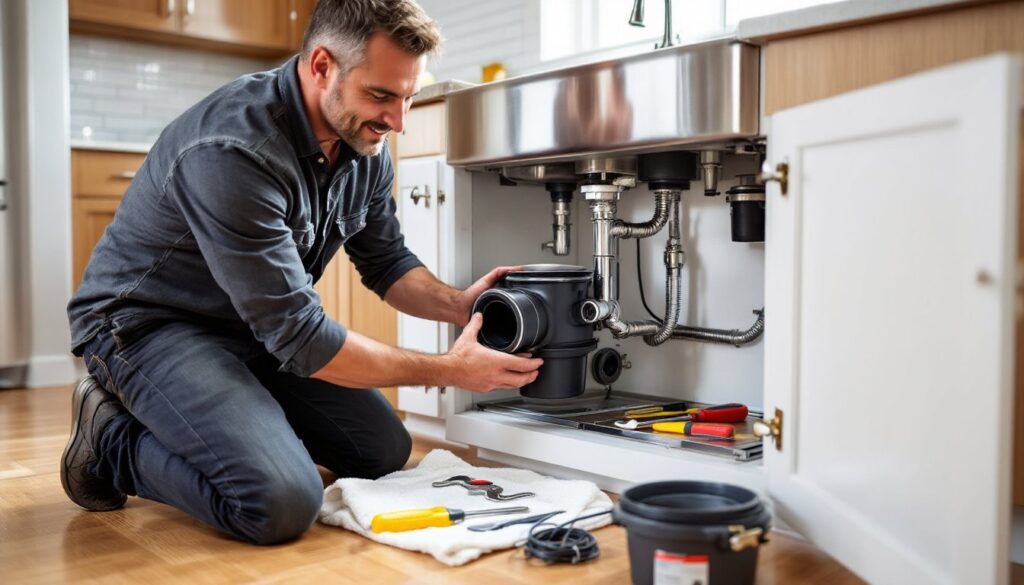
Step 1: Remove the old disposal. Disconnect the dishwasher drain hose (if present) and the discharge pipe. Unplug the unit or disconnect the hardwired cable. Support the disposal from below, it’s heavy, then twist the mounting ring counterclockwise to release it from the sink flange. Lower it carefully and set aside.
Step 2: Inspect and clean the sink flange. If the existing flange is in good shape and matches the new disposal’s mounting system, reuse it. Otherwise, remove the old flange by loosening the mounting assembly from below and cleaning away old putty from the sink opening. Popular Mechanics recommends using a plastic putty knife to avoid scratching stainless steel or composite sinks.
Step 3: Install the new sink flange. Roll a 1/2-inch rope of plumber’s putty and press it around the underside of the flange lip. Insert the flange into the drain opening, then from below, slide on the fiber gasket, backup ring, and mounting ring. Tighten the three mounting screws evenly in a star pattern until the flange is snug. Wipe away excess putty from above.
Step 4: Attach the disposal to the mounting assembly. With a helper or by bracing the unit on a stable object, lift the disposal and align the three mounting tabs with the slots in the mounting ring. Rotate the lower mounting ring clockwise until it locks in place. The unit should hang securely without wobbling.
Step 5: Connect the discharge tube. Slide the rubber gasket and metal flange onto the discharge outlet, then attach the elbow or straight discharge tube. The tube must align with the P-trap inlet: trim with a hacksaw if needed. Tighten the slip-nut connections by hand, then snug with channel locks, don’t overtighten, as this can crack the fittings.
Step 6: Connect the dishwasher drain (if applicable). Knock out the dishwasher inlet plug inside the disposal housing using a screwdriver and hammer. Retrieve the plug from inside the unit, leaving it in causes immediate clogs. Attach the dishwasher drain hose to the inlet with a hose clamp.
Step 7: Wire the disposal. If using a plug-in cord, attach it per the manufacturer’s instructions (usually involves removing a cover plate, connecting ground, neutral, and hot wires, and securing the cord with a strain relief). If hardwiring, connect the disposal’s wires to the circuit cable using wire nuts: black to black (hot), white to white (neutral), and green or bare to ground.
Step 8: Test for leaks. Restore power at the breaker. Plug the sink, fill it with several inches of water, then release the stopper while running the disposal. Watch all connections for drips. Tighten any fittings that leak, but avoid over-torquing plastic threads.
Common Installation Mistakes to Avoid
Forgetting to knock out the dishwasher plug. This is the number-one rookie error. If the plug remains in the disposal, the dishwasher will back up, flooding the cabinet or causing the disposal to overflow.
Using the wrong P-trap configuration. Garbage disposals sit lower than standard drains. The discharge tube must slope downward toward the P-trap: if it sags or rises, water and food waste will pool, leading to clogs and odors. Measure twice, trim once.
Over-tightening slip nuts and mounting bolts. Plastic drain fittings crack easily under excessive torque. Hand-tight plus a quarter-turn with channel locks is usually sufficient. Metal mounting bolts should be snug but not cranked down: overtightening can warp the sink flange or crack the mounting ring.
Skipping the plumber’s putty or using the wrong sealant. Some installers skip putty and rely on the rubber gasket alone. This works on some sinks but not all. Silicone caulk is not a substitute for putty, it’s harder to remove if the flange needs service later.
Ignoring local codes. Some jurisdictions require a disposal to be on a dedicated 15A or 20A circuit, with GFCI protection in newer homes. Others require an air gap for the dishwasher drain to prevent backflow. Check local codes or consult a licensed electrician before finalizing the electrical connection.
Failing to support the disposal during installation. Garbage disposals weigh 8 to 15 pounds, depending on horsepower. Trying to twist the mounting ring with one hand while holding the unit with the other is a recipe for dropped units, smashed fingers, or cross-threaded mounts. Use a second person, a sturdy box, or a disposal installation tool to support the weight.
Troubleshooting Your New Garbage Disposal
Disposal hums but doesn’t grind. This usually means the impeller is jammed. Turn off power, insert an Allen wrench (often included) into the hex hole on the bottom of the unit, and rotate the flywheel back and forth to free the obstruction. Remove the jam from above using tongs or pliers, never hands.
Leaks from the sink flange. If water drips from the top of the disposal, the flange isn’t sealed properly. Turn off power, remove the disposal, re-seat the flange with fresh plumber’s putty, and reinstall.
Leaks from the discharge tube or dishwasher connection. Check that all rubber gaskets are in place and slip nuts are snug. If the dishwasher hose clamp is loose, tighten it or replace it with a stainless steel worm-gear clamp for a more secure seal.
No power. Confirm the circuit breaker is on and the reset button on the bottom of the disposal isn’t tripped. Press the red reset button firmly: if it trips again immediately, the motor may be overloaded or faulty. Wait 10 minutes for the thermal overload to cool, then try again.
Persistent odors. Run cold water and grind ice cubes mixed with coarse salt to scrub the grinding chamber. Follow with citrus peels to freshen. Odors often come from food buildup in the rubber splash guard: flip it inside-out and scrub with a brush and dish soap.
Slow drainage. If the disposal drains sluggishly, check for a clog in the P-trap or downstream drain line. Remove the P-trap and inspect for grease buildup or foreign objects. Avoid chemical drain cleaners in disposals: they can corrode seals and metal components.
For persistent electrical issues or if the unit won’t reset after clearing a jam, consult a licensed electrician or plumber. Some problems, like a burned-out motor or failed capacitor, require professional diagnosis or replacement. Homeowners can find additional troubleshooting guidance at Popular Mechanics for tool-specific repairs and diagnostic steps.