Table of Contents
ToggleRancho Santa Fe sits among San Diego County’s most exclusive enclaves, where sprawling estates and Mediterranean-inspired architecture meet California’s coastal climate. Homes here weren’t built for the entry-level buyer, they’re high-value properties with unique design elements, mature landscaping, and premium finishes. That also means remodeling projects aren’t simple cosmetic updates. Whether homeowners are modernizing a dated kitchen, adding square footage, or adapting spaces to current lifestyle needs, the work often demands skilled trades, proper permitting, and an understanding of local building standards. This guide walks through what makes remodeling here distinct, which projects deliver the best return, and how to plan for both budget and timeline.
Key Takeaways
- Home remodeling in Rancho Santa Fe requires navigating strict Covenant design review approval, which can add weeks or months to project timelines regardless of construction speed.
- Kitchen renovations in Rancho Santa Fe typically cost $80,000–$250,000+ and commonly involve structural work like load-bearing wall removal, electrical upgrades to 200-amp service, and modern plumbing infrastructure to meet current codes.
- Luxury bathroom remodels often double original square footage and demand specialized waterproofing membranes, adequate ventilation, and radiant floor heating—all critical for managing coastal humidity in San Diego County.
- Establish a payment schedule tied to inspection milestones and never exceed the 10% or $1,000 deposit limit under California law to protect your investment during home remodeling projects.
- Plan for 6–8 week timelines for kitchen projects and 3–6 months for full-home remodels, and set aside 15–20% contingency budget to cover code compliance issues discovered during demolition in older estates.
- Verify all contractors hold current California Contractors State License Board (CSLB) licenses, proof of liability insurance, and workers’ compensation coverage before signing any home remodeling agreement.
Why Rancho Santa Fe Homes Are Prime for Remodeling
Many properties in Rancho Santa Fe were built between the 1970s and early 2000s, a period when floor plans favored formal dining rooms, closed-off kitchens, and compartmentalized layouts. Today’s buyers want open-concept living, chef-grade appliances, spa-inspired bathrooms, and smart home integration. That gap between original design and current expectations makes remodeling both necessary and lucrative.
The area’s strict covenant design review process also means any exterior changes, new windows, roofline alterations, added square footage, require approval from the Rancho Santa Fe Covenant. This isn’t a simple permit issue: it’s an architectural review that evaluates materials, color palettes, and how the project fits the neighborhood’s Spanish Colonial and Mediterranean aesthetic. Homeowners should budget time for this approval process, which can add weeks or months to a project timeline.
Another driver: these homes sit on large lots, often an acre or more. That space allows for accessory dwelling units (ADUs), detached casitas, or expanded outdoor living areas without the constraints typical of urban subdivisions. California’s ADU laws have streamlined permitting for qualifying units, making it easier to add rentable or multigenerational living space. But zoning rules, setback requirements, and utility hookups still need professional evaluation.
Finally, the local real estate market supports investment in high-end remodels. Median home values here exceed $2 million, and buyers expect top-tier finishes. A well-executed kitchen or primary suite renovation doesn’t just improve livability, it protects resale value and keeps the home competitive.
Popular Home Remodeling Projects in Rancho Santa Fe
Kitchen Renovations That Elevate Your Home
Kitchens in older Rancho Santa Fe homes often feature tile countertops, laminate cabinets, and appliances that haven’t been updated in decades. Modern buyers expect quartz or quartzite countertops, custom cabinetry with soft-close hinges, and professional-grade ranges (typically 36″ to 48″ wide). Island layouts with seating for four or more have become standard, replacing the peninsula or galley configurations common in older builds.
Structural changes frequently come into play. Removing a wall between the kitchen and family room requires a load-bearing analysis and often a steel beam or engineered header to carry the load. This isn’t DIY territory, hire a structural engineer to spec the beam size and a licensed contractor to install it. Permit requirements under the International Residential Code (IRC) apply to any structural modification, and inspections will check framing, electrical, and plumbing work.
Electrical upgrades are almost guaranteed. Older kitchens may have a single 20-amp circuit for countertop outlets, but the National Electrical Code (NEC) now requires at least two 20-amp small appliance circuits, plus dedicated circuits for the dishwasher, microwave, and range. If the home still has a 100-amp or 150-amp main panel, a service upgrade to 200 amps may be necessary to support modern loads, especially if adding high-draw appliances like an induction cooktop or a second oven.
Plumbing for pot fillers, prep sinks, or refrigerator ice makers also means running new water lines and possibly upsizing drain lines if adding a second sink. Homes built before 1995 often have galvanized steel or polybutylene supply lines, which are worth replacing during a major remodel to avoid future leaks.
Bathroom Upgrades for Modern Luxury
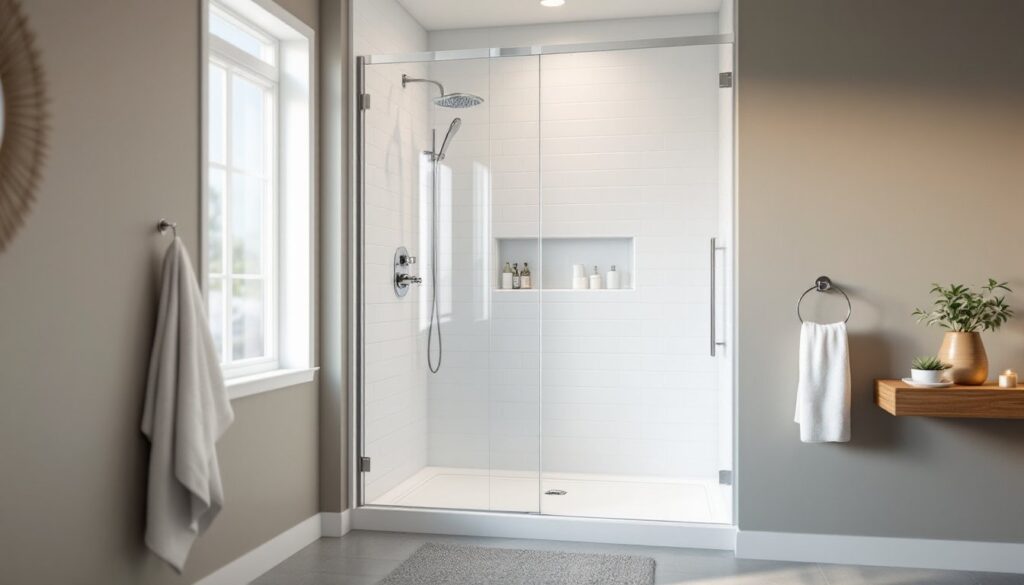
Primary bathrooms in Rancho Santa Fe often started as modest 8′ × 10′ spaces with a tub-shower combo and a single vanity. Luxury renovations typically double that footprint, incorporating walk-in showers with frameless glass enclosures, freestanding soaking tubs, dual vanities, and radiant floor heating.
Shower design has shifted dramatically. Current builds feature curbless or low-curb showers with linear drains, large-format porcelain tile (often 12″ × 24″ or larger), and multiple shower heads or body sprays. This requires careful slope management, floors must pitch at least 1/4″ per foot toward the drain, and a waterproofing membrane (not just a plastic pan) is essential. Products like Schluter KERDI or RedGard provide continuous waterproofing under tile.
Ventilation is non-negotiable. The IRC mandates either an operable window or a mechanical exhaust fan rated for the bathroom’s square footage (typically 50 to 110 CFM for most primary baths). Coastal humidity in San Diego County makes adequate ventilation even more critical to prevent mold in drywall and framing.
Flooring upgrades often include radiant heat mats installed beneath tile. These run on 120V circuits and add 10 to 15 watts per square foot, so electrical planning is necessary. A programmable thermostat should be surface-mounted nearby, not buried in a wall cavity where access is difficult.
Fixture quality matters. Budget-grade faucets and shower valves fail quickly under daily use. Look for products with solid brass bodies and ceramic disc cartridges. Matching finishes (matte black, brushed nickel, polished chrome) across all fixtures creates visual cohesion.
Planning Your Rancho Santa Fe Remodeling Project
Start with a realistic assessment of scope. Cosmetic updates, paint, hardware, light fixtures, are DIYable and don’t require permits. Structural changes, electrical work beyond replacing a fixture, plumbing that involves new drain lines, or anything affecting the exterior envelope all trigger permit requirements through San Diego County.
Engage a design professional early. For minor remodels, a kitchen and bath designer can provide CAD drawings and material specs. For additions or major layout changes, a licensed architect ensures the design meets code and Covenant standards. Architects typically charge 10% to 15% of construction cost, but their plans reduce costly change orders and rejections during permitting.
Permitting timelines vary. Simple interior remodels might clear in two to four weeks. Projects requiring Covenant review or structural engineering can take two to three months. Don’t order materials or schedule contractors until permits are approved, if the plans need revision, you’ll be stuck with non-returnable cabinets or tile.
Choose contractors carefully. Verify they hold a current California Contractors State License Board (CSLB) license in the appropriate classification (B for general building, C-10 for electrical, C-36 for plumbing). Check their license status and complaint history at contractor directories or the CSLB website. Ask for proof of liability insurance and workers’ comp coverage.
Establish a payment schedule tied to milestones, not a percentage upfront. Never pay more than 10% or $1,000 (whichever is less) as a deposit under California law. Subsequent payments should follow completed phases: framing inspection, rough-in inspection, final inspection.
Plan for occupancy disruption. Kitchen remodels typically take six to eight weeks once work begins, assuming no permit delays or material backorders. Bathrooms run four to six weeks. Full-home remodels can stretch three to six months. Set up a temporary kitchen with a microwave, toaster oven, and outdoor grill if you’re staying in the home during the work.
Cost Considerations for Home Remodeling in Rancho Santa Fe
High-end remodeling in Rancho Santa Fe runs significantly above state averages. Kitchen renovations typically start at $80,000 to $120,000 for a mid-level remodel with stock cabinetry and quartz counters. Custom cabinetry, premium appliances, and structural changes push that to $150,000 to $250,000 or more. Primary bathroom remodels range from $50,000 to $100,000 depending on size and finish level.
Labor costs reflect the region’s wage rates and demand for skilled trades. Expect to pay $75 to $125 per hour for licensed electricians or plumbers. General contractors often work on a cost-plus basis (actual costs plus 15% to 25% markup) or a fixed bid. Get at least three written bids for any project over $10,000.
Material costs fluctuate with market conditions. Lumber prices spiked during the pandemic and have since moderated but remain above historical averages. Appliance lead times have improved, but high-end brands (Wolf, Sub-Zero, Gaggenau) can still require eight to twelve weeks for delivery. Order early and confirm delivery dates before demolition begins.
Permit fees add to the total. San Diego County charges based on project valuation, typically 1% to 2% of estimated construction cost. A $100,000 remodel might incur $1,000 to $2,000 in permit fees, plus plan check fees if structural or architectural review is required.
Contingency budgets are essential. Set aside 15% to 20% of the total project cost for unforeseen issues. Opening walls often reveals outdated wiring, undersized framing, or previous water damage that needs remediation. These aren’t optional fixes, they’re code compliance issues that must be addressed once exposed.
Homeowners exploring renovation cost guides should adjust national averages upward for this market. Regional material availability, local labor rates, and the Covenant’s design standards all drive costs higher than typical California suburbs. For accurate estimates, use local cost estimators and consult multiple contractors familiar with Rancho Santa Fe projects.
Conclusion
Remodeling in Rancho Santa Fe isn’t a weekend project with a trip to the home center. It’s a process that requires architectural review, skilled trades, and a budget that reflects both the area’s high standards and the complexity of working with older, high-value homes. But for homeowners willing to invest the time and money, the payoff is a home that functions for modern living while maintaining the character and market value that define this community.