Table of Contents
ToggleBuilding a dedicated home theater isn’t just about buying a big screen and some speakers. It’s about acoustics, wiring, soundproofing, equipment integration, and making sure your gear doesn’t turn into an expensive pile of underperforming boxes. That’s where a specialized home theater contractor comes in. Unlike a general AV installer or an electrician, these pros understand the nuances of creating an immersive viewing experience, from seating sightlines to bass response. Whether you’re converting a basement or building a custom media room from scratch, hiring the right contractor can be the difference between a setup that wows and one that disappoints.
Key Takeaways
- A home theater contractor specializes in room design, acoustics, equipment selection, and calibration—expertise that goes beyond general electricians or handymen and ensures an immersive viewing experience.
- Hire a professional home theater contractor if your project involves multi-speaker surround systems, in-wall or ceiling speakers, structural changes, smart home automation, or compliance with building codes and permits.
- Verify contractor qualifications by checking CEDIA certification, licensing, insurance, portfolio references, and warranty coverage before committing to any installation.
- Home theater costs range from $3,000 for a basic 5.1 system to $150,000+ for high-end custom theaters, with the typical breakdown of 60% equipment, 30% labor, and 10% materials.
- Plan your installation timeline for 1–3 months on complex projects, and include acoustic treatment, proper ventilation, cable quality considerations, and post-install calibration to avoid costly mistakes.
- Always get a detailed contract in writing that specifies scope, equipment inclusion, permit responsibility, project timeline, change order procedures, and post-install support before work begins.
What Does a Home Theater Contractor Do?
A home theater contractor specializes in designing, installing, and calibrating audio-visual systems in residential spaces. They handle everything from initial room layout and acoustical treatment to equipment selection, wiring infrastructure, and final system tuning.
Their scope typically includes:
- Room design and acoustics: Assessing room dimensions, recommending acoustic panels, bass traps, and soundproofing solutions to control reflections and isolate sound
- A/V equipment selection: Matching projectors, screens, speakers, receivers, and streaming devices to the client’s budget and viewing habits
- Installation and wiring: Running HDMI cables, speaker wire, and power lines, often inside walls or through conduit, while meeting National Electrical Code (NEC) requirements
- Seating and lighting: Planning optimal viewing angles, recommending tiered seating if space allows, and integrating dimmable or color-tuned lighting
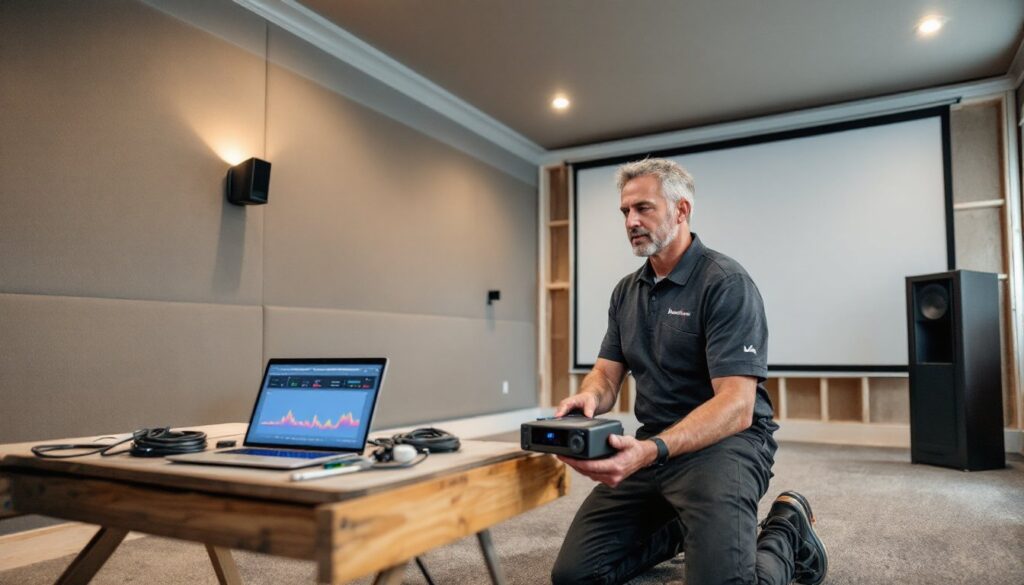
- Calibration: Using measurement tools like microphones and software to fine-tune speaker levels, crossover points, and equalization for balanced sound
Some contractors also integrate smart home systems, allowing clients to control lights, shades, climate, and A/V equipment from a single interface. Others focus strictly on the audio-visual chain.
The key difference between a home theater contractor and a general electrician or handyman? Depth of knowledge. A good theater contractor understands THX standards, Dolby Atmos speaker placement, 4K and 8K signal bandwidth, and how room modes affect bass frequencies, details that matter when you’re spending thousands on equipment.
When Should You Hire a Home Theater Contractor?
Not every home theater setup requires a professional. Wall-mounting a TV and connecting a soundbar? That’s a straightforward DIY task for most homeowners.
But you should consider hiring a contractor if:
- You’re building a dedicated theater room: Multi-speaker surround systems, in-wall or in-ceiling speakers, projector mounts, and acoustic treatments all require precise placement and calibration
- You’re running cables through walls or ceilings: This often involves cutting into drywall, fishing wire through insulation, and ensuring compliance with local building codes, especially for low-voltage wiring in new construction or remodels
- You want a 7.1, 9.1, or Atmos system: These configurations demand careful speaker placement, amplifier matching, and room correction. Misplaced height channels or poorly calibrated subwoofers can ruin the experience
- Your project involves structural changes: Adding tiered seating platforms, soundproofing walls with additional drywall and Green Glue, or installing a dropped ceiling for overhead speakers may require permits and structural assessment
- You’re integrating automation: Whole-home control systems like Control4, Crestron, or Savant require programming and network configuration beyond typical DIY scope
If your project touches electrical, HVAC (for dedicated cooling), or load-bearing walls, you’ll likely need permits. Many jurisdictions require licensed electricians for certain wiring tasks, even in a low-voltage theater setup. A qualified contractor will know when to pull permits and when to bring in additional trades.
How to Find and Vet Qualified Home Theater Contractors
Start by identifying contractors with CEDIA (Custom Electronic Design & Installation Association) certification or similar credentials. CEDIA members have access to ongoing training on the latest A/V technologies and installation standards.
Other ways to find qualified pros:
- Local A/V specialty retailers: Shops that sell high-end audio and video gear often have in-house installers or can recommend trusted contractors
- Online platforms: Services like professional matching sites connect homeowners with vetted local installers based on project scope and budget
- Referrals: Ask neighbors, colleagues, or online home theater forums for recommendations. Photos and reviews from real projects are more valuable than polished marketing sites
Once you have a shortlist, verify:
- Licensing and insurance: Depending on your state, contractors may need an electrical license, low-voltage license, or general contractor license. Always confirm they carry liability insurance and workers’ compensation
- Portfolio and references: Ask to see completed projects similar in scope and budget to yours. Contact past clients and ask about communication, timeline adherence, and post-install support
- Warranties: Reputable contractors warranty both their labor and the equipment they install, typically one to three years on labor and manufacturer warranties on gear
Key Questions to Ask Before Hiring
Before signing a contract, clarify:
- What’s included in the quote? Does it cover equipment, wiring, wall penetrations, patching and painting, acoustic treatment, and calibration? Or just gear and basic install?
- Who handles permits? The contractor should obtain necessary permits and schedule inspections if required
- What’s the project timeline? Include lead times for equipment, rough-in wiring (if part of new construction or remodel), finish work, and final calibration
- How do you handle change orders? Scope creep happens. Understand how pricing adjusts if you add features mid-project
- What post-install support do you provide? Will they walk you through system operation? Offer remote support? Return for future upgrades?
- Do you subcontract any work? If so, are those subs licensed and insured? Who’s responsible if a subcontractor causes damage?
Get everything in writing. A detailed contract protects both parties and sets clear expectations.
What to Expect During the Home Theater Installation Process
A professional installation typically follows this sequence:
1. Initial consultation and design (1–2 weeks)
The contractor visits your space, takes measurements, discusses your viewing preferences, and evaluates existing electrical and HVAC. They’ll draft a system design, speaker layout, and equipment list.
2. Proposal and contract signing
You’ll receive a detailed quote covering equipment, labor, materials (wire, mounts, plates, conduit), and any required permits. Review it carefully.
3. Rough-in phase (1–3 days)
If walls are open (new construction or remodel), this is when contractors run speaker wire, HDMI cables, and power lines. They’ll install blocking between studs for wall-mounted equipment and mark locations for outlets and back boxes. This phase may require electrical inspection before drywall closes up.
4. Equipment procurement (1–4 weeks)
Lead times vary. Custom speakers, projectors, or automation components may take weeks to arrive. Off-the-shelf gear ships faster.
5. Finish installation (2–5 days)
Once walls are finished and painted, the contractor mounts the screen or TV, installs speakers (in-wall, in-ceiling, or freestanding), racks the receiver and source components, and connects all wiring. They’ll also install acoustic panels if specified.
6. Calibration and programming (1 day)
Using a calibration microphone and software like Audyssey, Dirac Live, or YPAO, the contractor tunes speaker levels, delays, crossovers, and equalization. For automation systems, they’ll program scenes, remotes, and touchscreen interfaces.
7. Walkthrough and training
The contractor demonstrates system operation, explains remote functions, and troubleshoots any issues. This is your chance to ask questions and get comfortable with your new setup.
Timeline varies based on project complexity. A basic 5.1 system in a finished room might take a week start to finish. A full custom theater with construction, seating, and automation can stretch two to three months.
Cost Factors and Budgeting for Your Home Theater Project
Home theater projects range from a few thousand dollars to well into six figures. Budget depends on room size, equipment quality, and installation complexity.
Typical cost breakdowns:
- Basic 5.1 system in existing room: $3,000–$8,000 (mid-tier receiver, bookshelf or in-wall speakers, subwoofer, modest projector or large TV, basic install)
- Mid-range dedicated theater: $15,000–$40,000 (quality projector and screen, 7.1 or Atmos speakers, acoustic treatment, tiered seating, automated lighting and shades)
- High-end custom theater: $50,000–$150,000+ (premium projector, immersive audio with multiple subwoofers, extensive soundproofing, custom seating, full smart home integration)
What drives costs:
- Equipment grade: Entry-level receivers and speakers deliver solid performance. Flagship models with advanced room correction, higher power, and premium drivers cost significantly more
- Installation complexity: In-wall and in-ceiling speakers require cutting drywall, fishing wire, and patching. Conduit runs in unfinished basements are simpler and cheaper
- Acoustic treatment: Fabric-wrapped panels, bass traps, and diffusers range from $500 for DIY kits to $5,000+ for custom-built solutions
- Structural work: Adding soundproofing (additional drywall layers, resilient channels, mass-loaded vinyl), building a riser, or creating a star ceiling adds labor and materials
- Automation and control: Integrated systems cost more upfront but improve usability. Expect $2,000–$10,000 for professional automation, depending on scope
Many homeowners use tools like cost estimators to gauge regional pricing and compare contractor bids. Keep in mind that material costs fluctuate and labor rates vary by market. Urban areas typically see higher hourly rates ($75–$150/hour) than rural regions.
Budgeting tips:
- Allocate about 60% for equipment, 30% for labor, and 10% for materials and contingencies
- Plan for future upgrades. Run extra conduit or spare wiring during rough-in for easier additions later
- Don’t skimp on calibration. A well-tuned modest system often outperforms poorly set up premium gear
Common Mistakes to Avoid When Working with a Contractor
Even with a qualified pro, things can go sideways. Here’s what to watch out for:
Choosing price over qualifications
The lowest bid often comes from contractors cutting corners, using subpar wire, skipping calibration, or rushing the install. Vet credentials and references first, then compare pricing.
Unclear scope of work
If the contract doesn’t specify who supplies equipment, handles drywall repair, or paints patched walls, disputes arise. Spell out every deliverable.
Ignoring room acoustics
Throwing expensive speakers into a bare, boxy room creates echoes and muddy bass. Acoustic treatment isn’t optional in a serious theater. If the contractor doesn’t mention it, ask why.
Skipping the walkthrough
Don’t sign off on completion until you’ve tested every input, speaker, and control function. Problems are easier to fix before final payment.
Not planning for ventilation
A/V equipment generates heat. Enclosed racks need ventilation fans or vented doors. Overheating shortens component life and can trigger shutdowns mid-movie.
Overlooking cable quality for long runs
Cheap HDMI cables work fine under 10 feet. Runs over 25 feet may need active or fiber-optic cables to maintain 4K/8K signal integrity. Your contractor should know this.
Failing to future-proof
Technology evolves. Run conduit or at least pull strings in walls so you can swap cables later without tearing into drywall again.
If you’re researching contractors and planning the scope yourself, sites with renovation guides can help estimate realistic timelines and budgets before you meet with pros. Going in informed keeps the project on track and the relationship professional.