Table of Contents
ToggleBath Fitter promises a one-day shower installation without the dust, demolition, and weeks-long timelines of traditional remodeling. But that convenience comes at a price, and figuring out exactly what homeowners pay can feel like pulling teeth. Unlike traditional contractors who give you itemized bids, Bath Fitter operates on a consultant-based model with pricing that varies widely based on configuration, materials, and regional markets. If you’re weighing the cost of a walk-in shower install against a conventional tear-out and rebuild, here’s what the numbers actually look like in 2026.
Key Takeaways
- Bath Fitter walk-in shower costs between $4,000 and $10,000, with most homeowners paying $6,500 to $8,500 for a standard installation, making it competitively priced against traditional tile remodels that range from $5,000–$15,000+.
- The one-day installation process requires no demolition or structural work, making Bath Fitter ideal for homeowners who need a fast turnaround and want to avoid weeks of traditional remodeling timelines.
- Final pricing varies significantly based on shower size, material upgrades, accessories (grab bars, seating), door style, existing plumbing condition, and regional labor rates—always request multiple quotes to compare franchise locations.
- Bath Fitter provides a lifetime warranty on materials and workmanship, but plumbing relocations, structural repairs, electrical work, and water damage remediation are not included and may require separate contractors.
- The investment makes sense if your existing shower structure is sound and you prioritize convenience, but it’s not recommended if you have structural damage, want full design control, or plan to sell your home soon since the warranty doesn’t transfer.
What Is Bath Fitter and How Does It Work?
Bath Fitter is a franchise-based bathroom remodeling company that specializes in acrylic overlay systems. Instead of ripping out your existing shower or tub, they custom-fabricate a seamless acrylic shell that fits directly over it.
The process starts with an in-home consultation where a Bath Fitter rep takes precise measurements of your current shower. Those dimensions are sent to the manufacturing facility, where a one-piece or multi-panel acrylic surround is fabricated to match your space. Installation typically happens in a single day, no plumber or tile setter required.
The company has been around since the mid-1980s and operates across North America. Because it’s a franchise model, pricing, product offerings, and service quality can vary regionally. All installations include a lifetime warranty that covers the acrylic material and installation workmanship, though it doesn’t transfer if you sell your home.
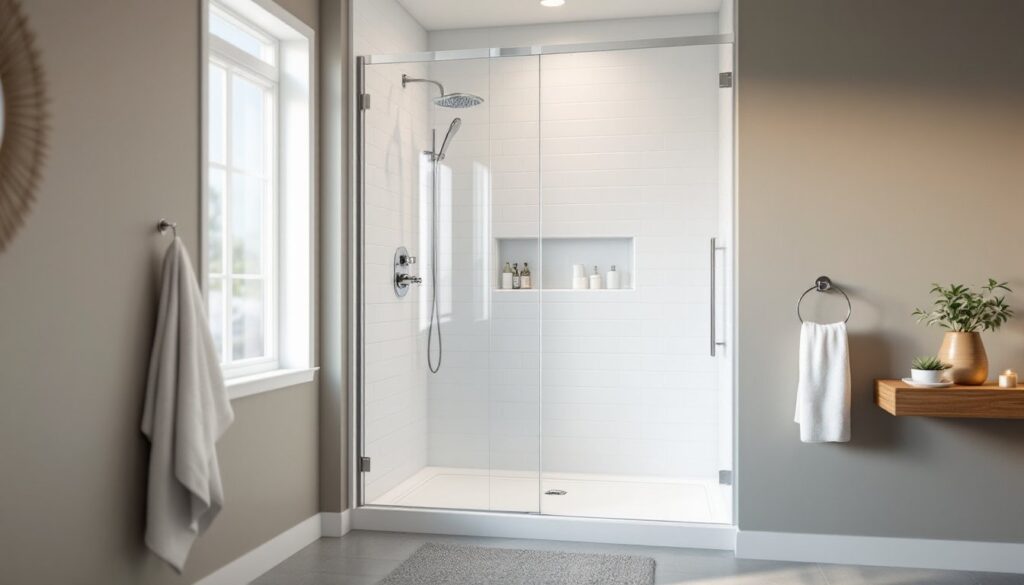
Walk-in showers are one of Bath Fitter’s core offerings. They can retrofit a tub-shower combo into a curbless or low-threshold walk-in, add grab bars, install built-in seating, and integrate accessibility features without structural modifications in most cases.
Average Cost of a Bath Fitter Walk-In Shower
Expect to pay between $4,000 and $10,000 for a Bath Fitter walk-in shower installation in 2026. Most homeowners report final costs in the $6,500 to $8,500 range for a standard alcove conversion with mid-tier finishes.
That pricing is significantly higher than a DIY fiberglass surround kit (which runs $300–$800 in materials) but lower than a full tile-and-pan rebuild with a custom glass enclosure, which can hit $12,000–$20,000+ depending on tile choice and labor rates.
Bath Fitter doesn’t publish fixed pricing online. Every quote is generated after an in-home visit, and sales reps have some wiggle room on final numbers. Be prepared for a sales pitch, it’s a high-pressure environment, and discounts often appear if you’re willing to commit on the spot.
What Impacts the Total Price?
Several factors push costs up or down:
- Shower size and layout: A standard 60″ alcove costs less than a corner unit or a large walk-in with multiple walls.
- Material upgrades: Bath Fitter offers several acrylic finishes, from basic white to granite-look patterns and subway tile textures. Upgraded finishes add $500–$1,500.
- Accessories: Built-in corner shelves, grab bars, fold-down seats, and upgraded showerheads are add-ons. A safety package with grab bars and seating typically adds $800–$1,200.
- Door style: A basic sliding door costs less than a frameless glass panel or hinged door.
- Existing plumbing condition: If your valve, drain, or supply lines need replacement, that’s extra. Bath Fitter installers aren’t licensed plumbers in most states, so plumbing work may require a separate contractor.
- Regional labor rates: Pricing in metro areas like San Francisco or New York runs 15–30% higher than rural or Midwest markets.
What’s Included in the Installation Price?
The base installation package covers:
- Custom-fabricated acrylic surround (either one-piece or multi-panel depending on access)
- Acrylic shower pan or base (low-threshold or zero-entry options available)
- Wall panels that overlay existing tile or fiberglass
- Basic showerhead and fixtures (you can upgrade to rain heads, handheld combos, or thermostatic valves for additional cost)
- Standard door (typically a framed sliding door: frameless and pivot doors cost more)
- Silicone sealing and trim work
- One-day installation by a Bath Fitter-trained crew
- Lifetime warranty on materials and workmanship (non-transferable)
What’s not included:
- Demolition beyond minimal trim removal
- Structural repairs (rotted studs, subfloor damage, mold remediation)
- Plumbing relocations or valve replacement
- Electrical work (if adding lighting, ventilation, or heated floors)
- Permits (rarely required for overlay installs, but check local codes)
- Disposal fees for old materials if you’re doing a partial tear-out first
If your existing shower has water damage, expect to pay for repairs before Bath Fitter will install. They’ll overlay what’s there, but they won’t cover up structural issues. That can add $500–$2,000+ depending on severity.
Bath Fitter vs. Traditional Shower Remodel: Cost Comparison
Here’s how Bath Fitter stacks up against other common approaches:
DIY Fiberglass Surround Kit: $300–$800 in materials, 1–2 days of labor. You’ll need basic tools (drill, level, saw, caulk gun). Good for budget-conscious homeowners with solid DIY skills, but fiberglass scratches easily and looks builder-grade.
Professional Fiberglass or Acrylic Install: $1,500–$3,500 including labor. A general contractor or handyman installs a prefab unit. Faster and cheaper than tile, but you’re limited to stock sizes and finishes.
Tile Shower with Custom Pan: $5,000–$15,000+. Includes waterproof membrane (RedGard, Kerdi, or similar), mortar bed or foam pan, tile, grout, and glass enclosure. Timeline: 5–10 days. High durability and design flexibility, but labor-intensive and messy. Many homeowners compare Bath Fitter pricing to big-box installer programs for context.
Bath Fitter Walk-In Shower: $4,000–$10,000, installed in one day. No demolition, no tile work, no extended timelines. Mid-range aesthetics, solid durability, and a hands-off process.
Bath Fitter makes sense if you want speed, low mess, and a warranty-backed install without managing subcontractors. It’s a poor fit if you want full design control, plan to DIY, or need structural work anyway.
National cost databases like those on HomeAdvisor and ImproveNet show traditional shower remodels averaging $6,000–$9,000 in 2026, putting Bath Fitter in a similar range for turnkey service.
Financing Options and Ways to Save
Bath Fitter partners with third-party lenders to offer financing plans, typically through GreenSky or similar home improvement loan providers. Rates vary based on credit score, but promotional offers (0% APR for 12–18 months, or extended terms at 6–9% APR) are common.
Before financing, compare rates to:
- A home equity line of credit (HELOC): often 7–10% APR in 2026, tax-deductible if used for home improvements.
- A personal loan: 8–15% APR depending on credit, no collateral required.
- Cash-out refinance: makes sense only if you’re already refinancing your mortgage.
To lower your total cost:
- Get multiple quotes: Even within Bath Fitter, pricing can vary by territory. Request estimates from at least two franchise locations if you’re near a metro area.
- Negotiate: Sales reps often have $500–$1,500 in discount authority. Ask what they can do if you sign today, but don’t feel pressured to commit on the spot.
- Skip unnecessary add-ons: Upgraded showerheads, extra shelving, and designer finishes add up quickly. Stick to the essentials and upgrade fixtures yourself later if needed.
- Time it right: Some franchises offer seasonal promotions (late winter, early fall). Ask if any sales are coming up.
- Check for rebates: If you’re adding accessibility features (grab bars, low-threshold entry), you may qualify for state or local aging-in-place grants or tax credits.
Platforms like Angi let you compare Bath Fitter pricing against local contractors who specialize in acrylic and fiberglass installs.
Is Bath Fitter Worth the Investment?
Bath Fitter delivers value in three scenarios:
- You need a fast turnaround: If your only shower is out of commission and you can’t wait a week for tile work, the one-day install is a lifesaver.
- You want a hands-off process: No coordinating plumbers, tile setters, and glass installers. One company handles everything.
- Your existing shower structure is sound: Bath Fitter works best when the bones are good but the surface is dated, stained, or cracked.
It’s a poor choice if:
- You have structural damage (rotted studs, failing subfloor, active leaks). Fix those first, or you’ll be overlaying a ticking time bomb.
- You want full design control: Acrylic finishes look decent, but they don’t compare to custom tile work or natural stone.
- You’re planning to sell soon: The lifetime warranty doesn’t transfer, and Bath Fitter doesn’t add significant resale value compared to a traditional remodel.
- You’re comfortable DIYing: A handy homeowner can install a fiberglass surround for a fraction of the cost.
The acrylic material is durable, resistant to mold, mildew, and chipping, but it can scratch. Avoid abrasive cleaners and rough scouring pads. Use a microfiber cloth and mild detergent.
Long-term, expect 15–25 years of use before the finish dulls or seams start to show wear. That’s comparable to mid-grade tile and significantly better than fiberglass.